
Storm-Proofing Your Staten Island Roof Before the Season Peaks
The Work Is Cheaper Before the Storm
Atlantic storm season runs from June through November, but the busy stretch for Staten Island is right now — mid-August through late October. That's when we get the coastal systems that stall offshore, push sustained wind across the South Shore, and dump three inches of rain in an afternoon. It's also when our phone doesn't stop ringing for three days straight.
Here's the pattern we've watched for over twenty years: the roofs that fail in a storm were already failing before it. A lifted shingle, a cracked pipe boot, a gutter packed with maple seeds — none of it leaks on a calm day. Add 50 mph wind and horizontal rain and every one of those becomes a ceiling stain. A repair booked in August costs a fraction of what the same problem costs in October, once water has been in the framing for a week.
Get a Free Estimate!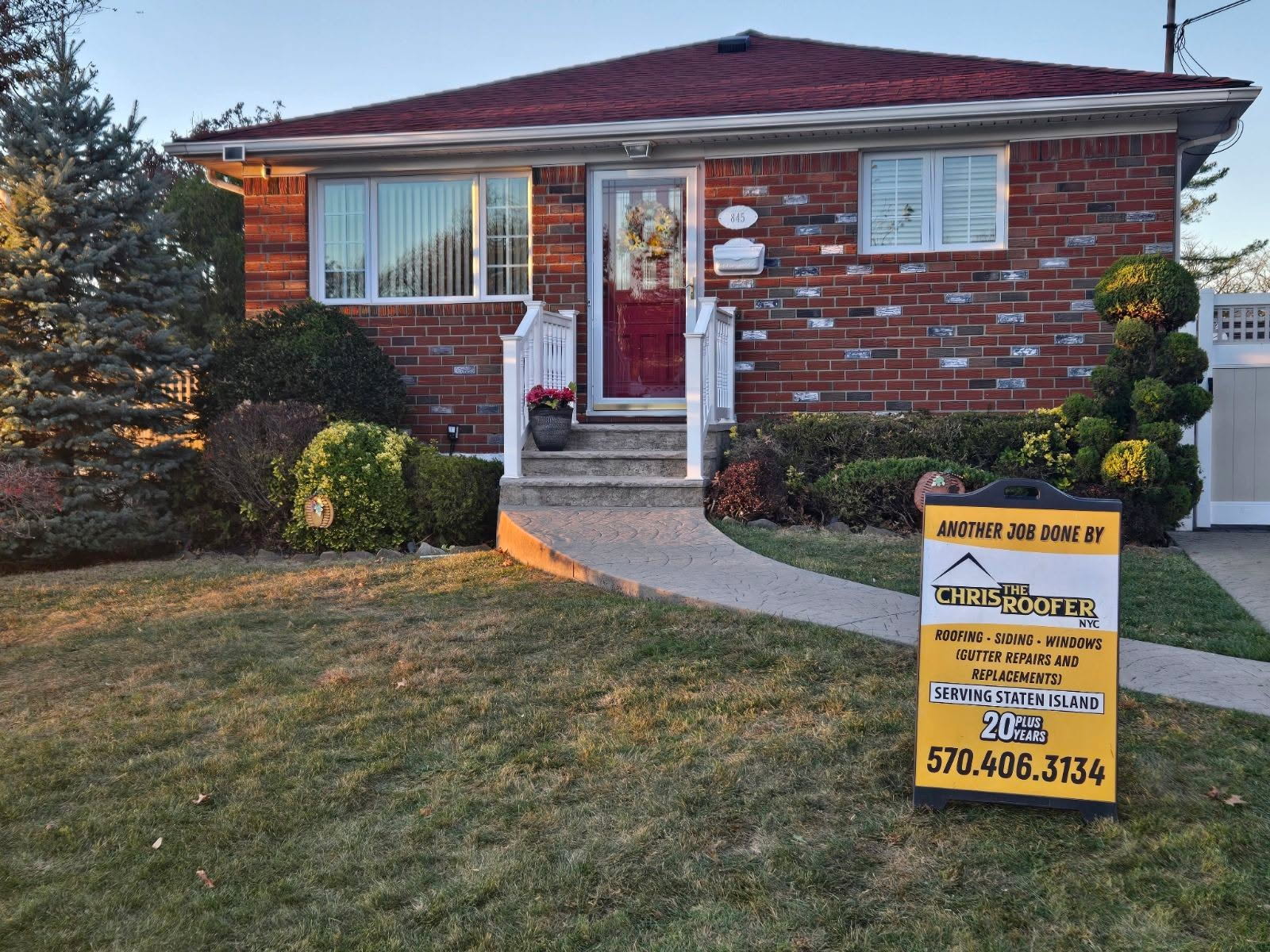
Five Things Worth Checking Before the Next Big Blow
You don't need to be a roofer to catch most of what matters. Below are the five areas we look at first on a pre-storm inspection, in the order we look at them — and what each one tells you about whether your roof is ready.
Look Before the Forecast Does
Most storm damage we repair started as something visible weeks earlier. Rusted vent flashing. A pipe boot with the rubber collar cracked open. Nail heads backing out along a ridge. Sealant at a chimney that has gone chalky and pulled loose. All of it is findable on a dry afternoon, and all of it is a five-minute fix in August versus a ceiling repair in October.
A real inspection is not a walk around the lawn. We get on the roof, check every penetration, pull back a course where we need to see the deck, and look in the attic for staining on the sheathing — because the underside of a roof tells the truth faster than the top does. You get a written estimate either way, and if nothing needs doing, we tell you that too.
"We had a tree go through our garage roof during a storm and needed a full replacement of the roof. Chris was understanding and willing to help. He came and assessed the damage, assured us that he could help, and gave us a very reasonable estimate."
See our profile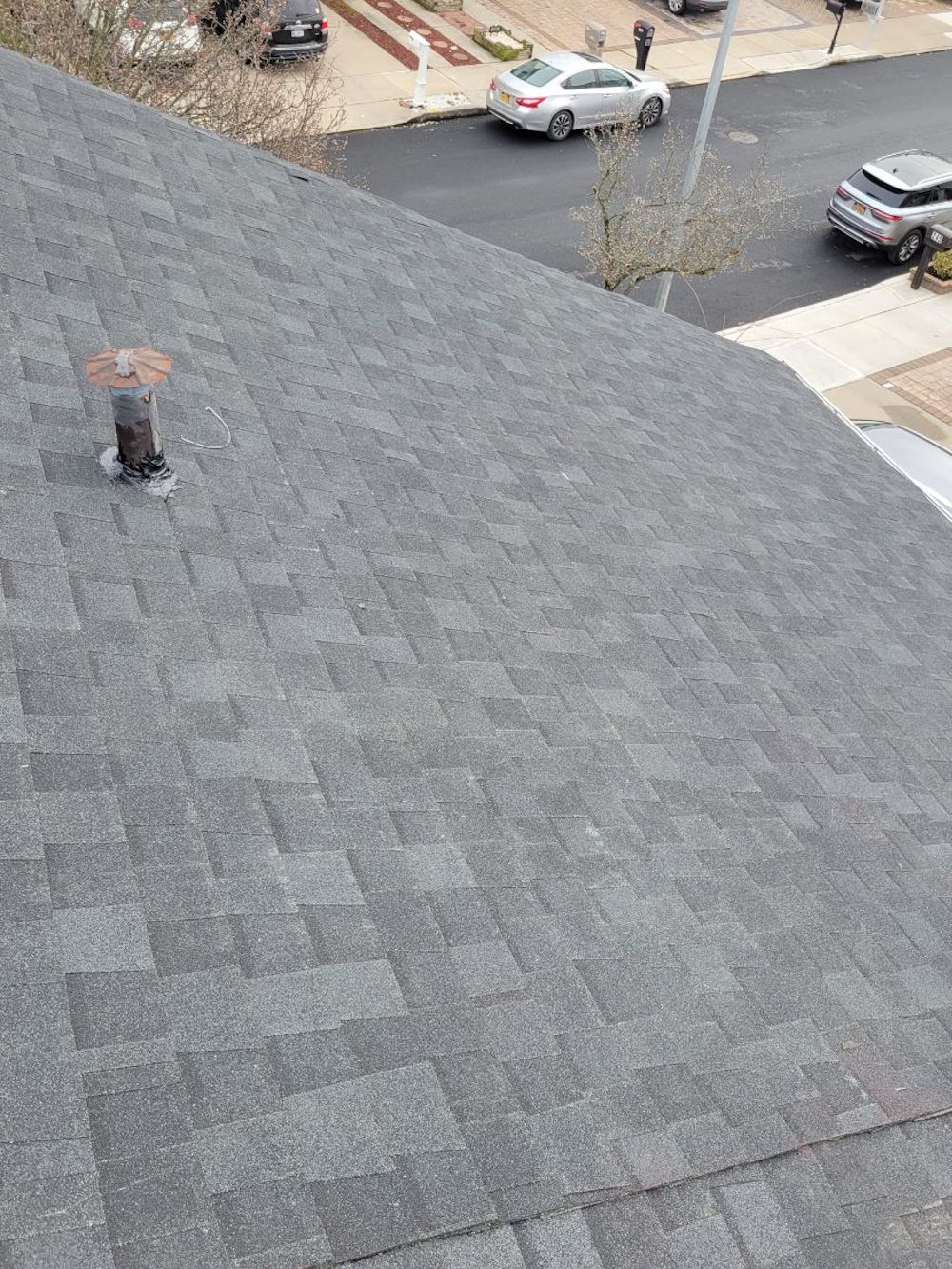
Old Shingles Fail in a Specific Order
Asphalt shingles have a self-sealing adhesive strip that bonds each course to the one below it in warm weather. That bond is what makes a roof wind-resistant — not the nails. As shingles age, the asphalt loses the oils that keep it flexible, the granules shed, and the seal strip gives up. You'll see it as curled corners, bald patches where granules have washed into the gutter, and shingles that flutter visibly on a windy day. From the ground, the tell is usually a roof that looks uneven or slightly wavy along the courses.
If your roof is past twenty years, or you're finding granules in the gutter every time you clean it, storm season is the wrong time to gamble. It's worth getting a straight answer on whether you're looking at a targeted repair or a full roof replacement in Staten Island — and we'll tell you which one your roof actually needs.
"Chris did an excellent job and the price was right. The job was professional, quick, and neat. The leaks are all fixed and it looks great."
See our profile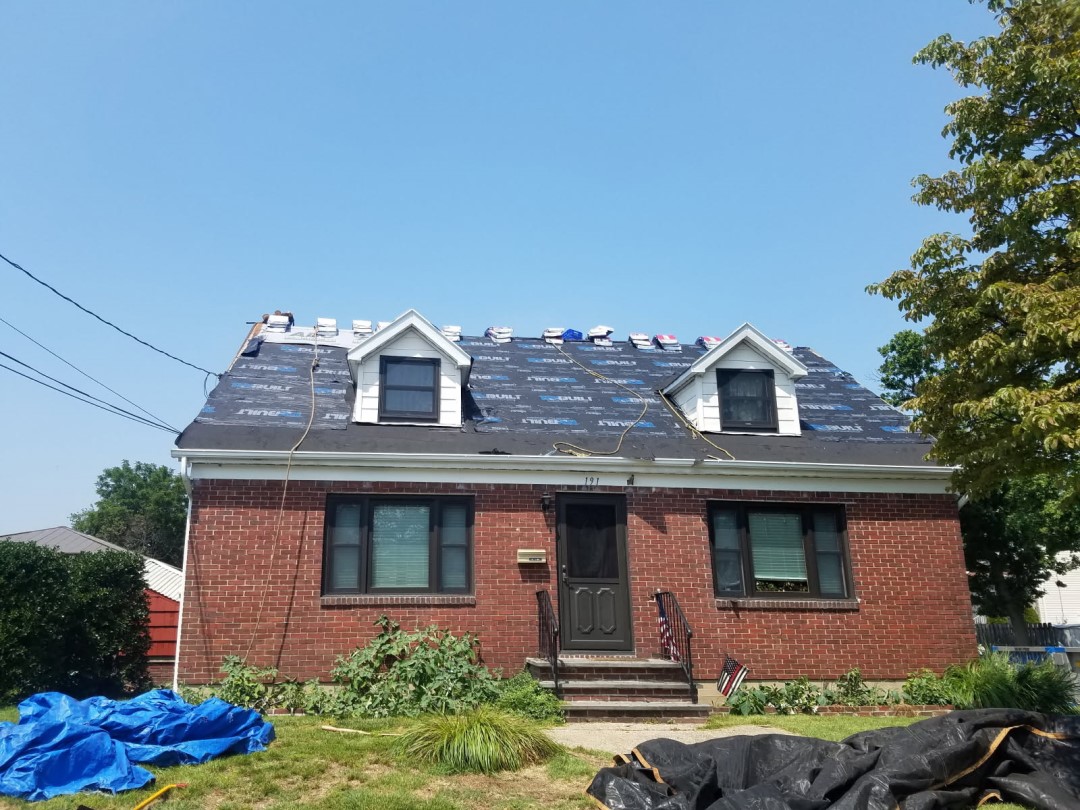

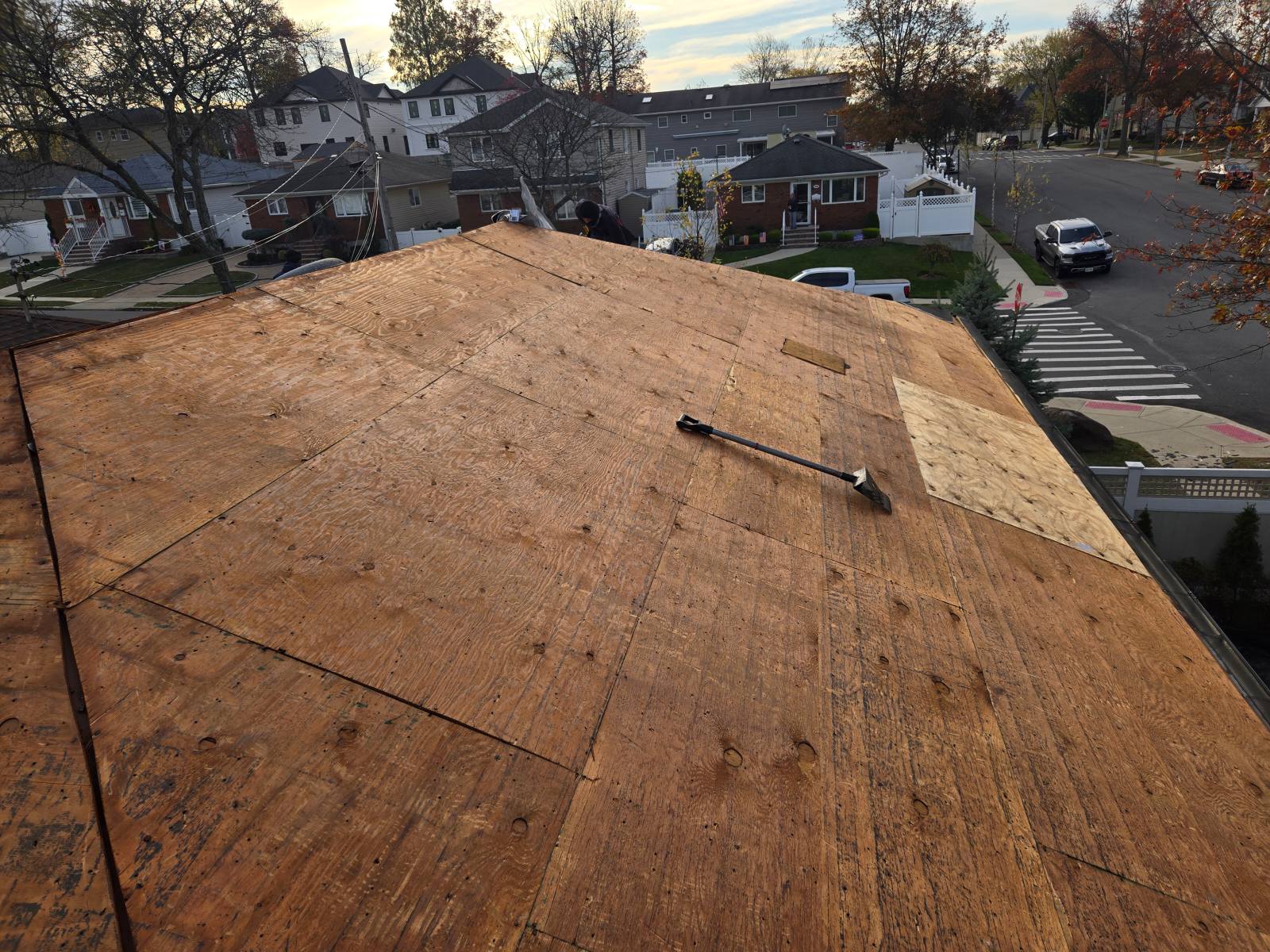
The same Staten Island Cape Cod — deck and synthetic underlayment on one side, finished GAF shingles on the other. Drag the handle to compare.
A Storm Is a Drainage Problem First
This is the part homeowners skip, and it's the one that causes the most expensive damage. A big summer storm can put more water on your roof in an hour than a whole week of steady rain. If the gutters are packed with maple seeds, shingle granules, and the debris that's been collecting since spring, that water has nowhere to go. It backs up over the front lip, runs behind the gutter, and soaks the fascia and soffit — the exact spot where rot starts and where squirrels and birds get in later.
Then it lands at the foundation instead of six feet away from it, which is how a roof problem becomes a wet basement. Check that every downspout actually discharges away from the house, that the extensions haven't been kicked loose by the lawn crew, and that the gutters are still pitched toward the outlets rather than sagging in the middle. If a section is pulling away from the fascia or the seams are dripping, get gutter repair in Staten Island handled now — it's a small job in August and a much bigger one after the fascia has been wet for a month.
"They were extremely precise in their work, and I couldn't be happier. They expertly installed a brand new roof with all the accessories."
See our profileWhat Storm-Ready Work Looks Like
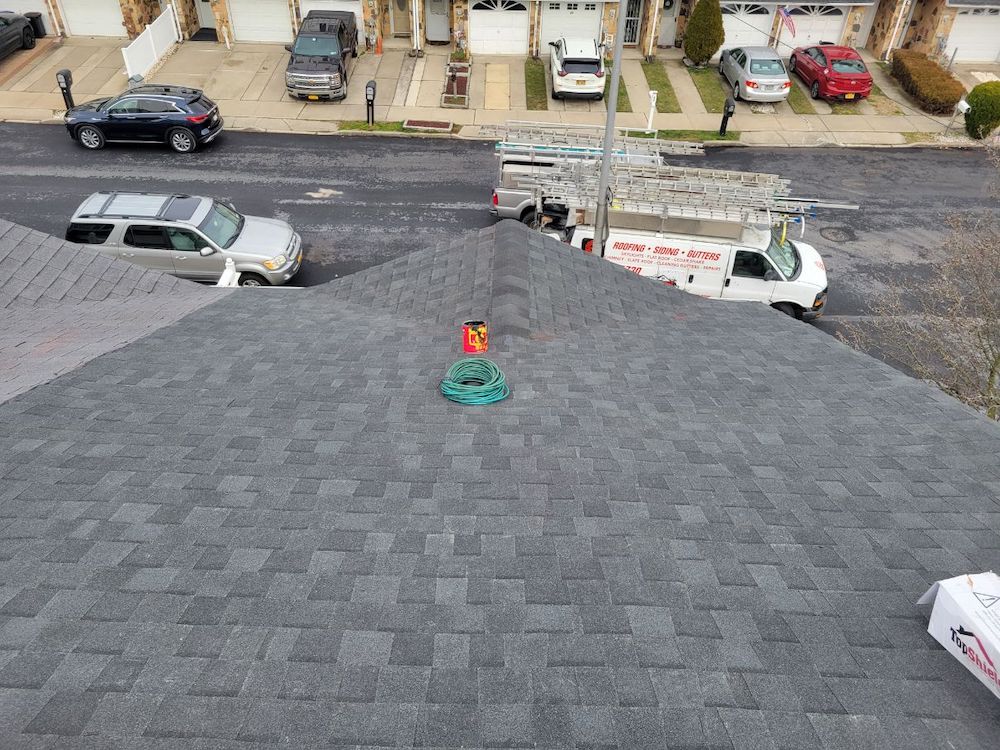
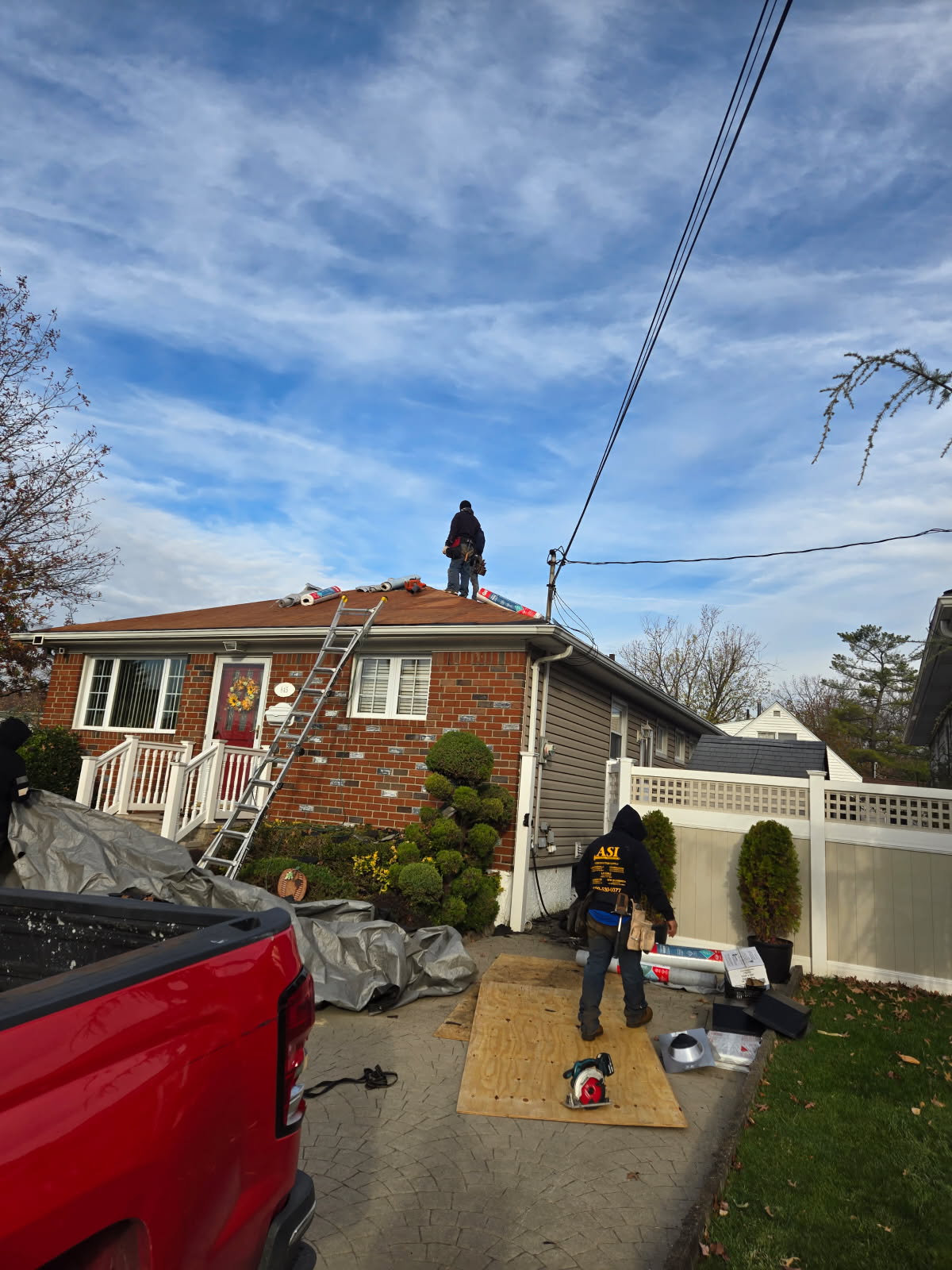
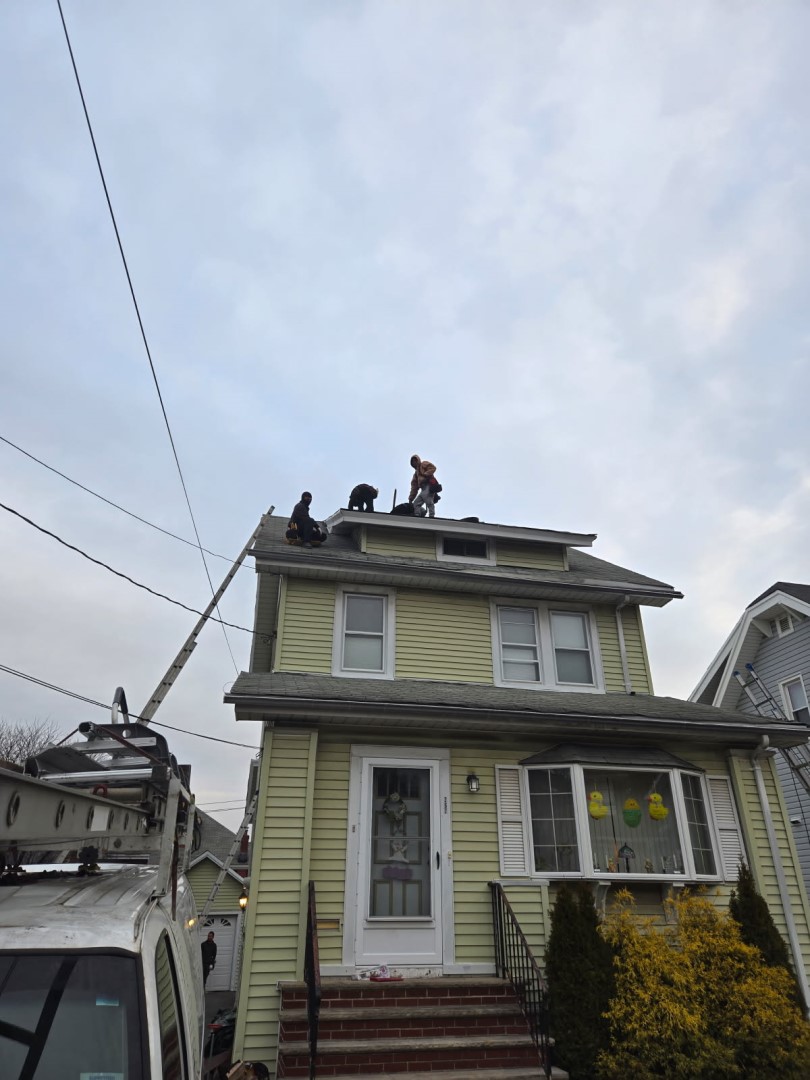
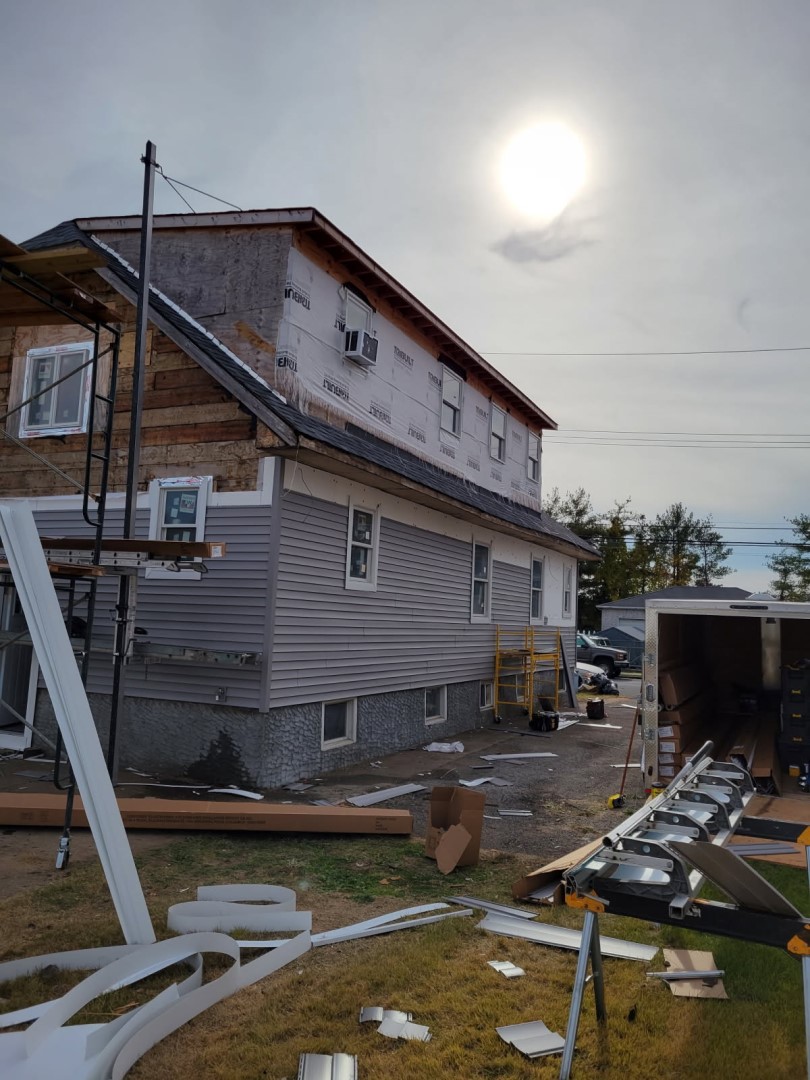
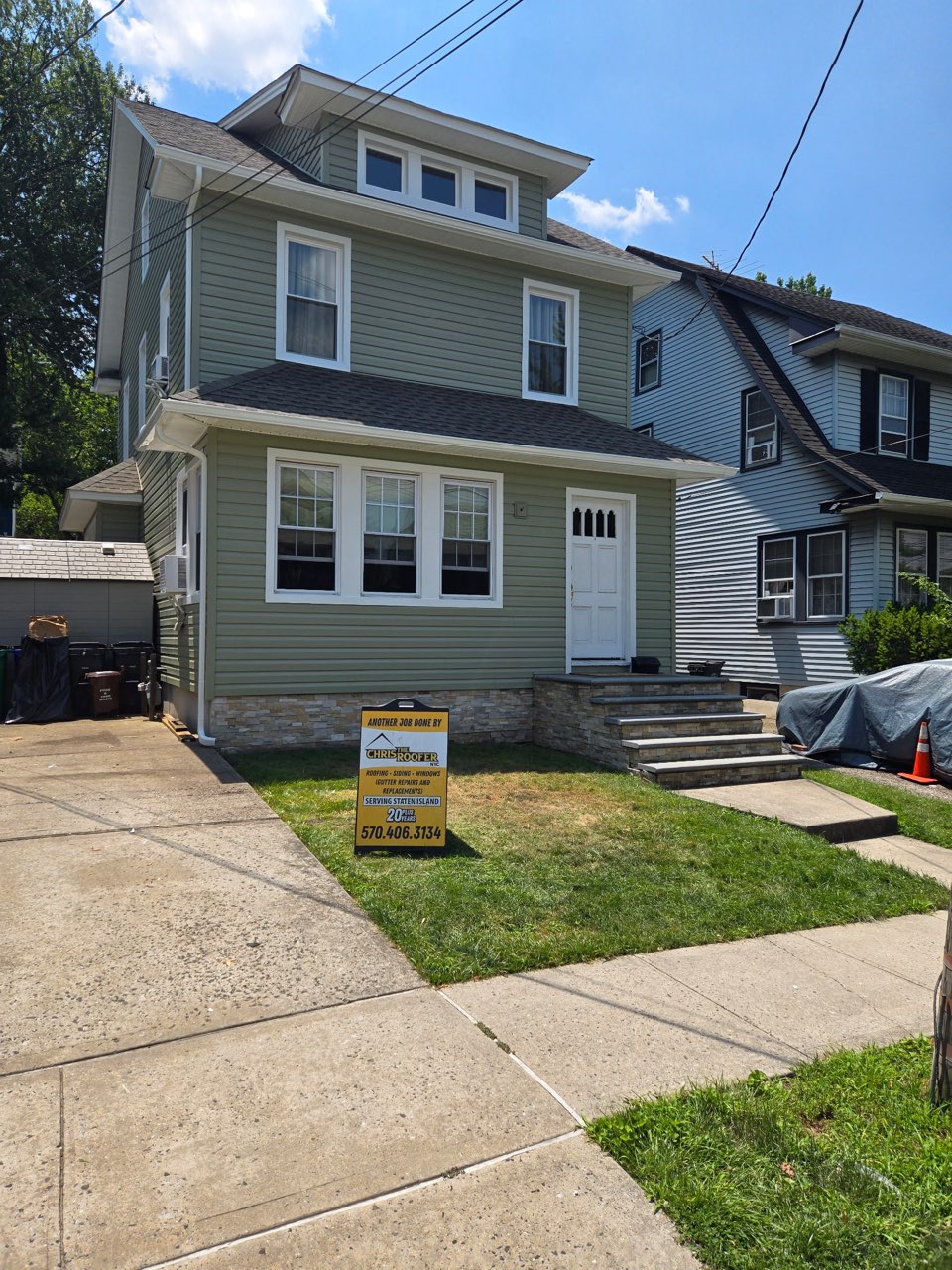
A roof that holds up in wind is built a specific way: full tear-off down to the deck so we can see what we're nailing into, synthetic underlayment across the whole field, ice and water shield at the eaves and in the valleys, proper starter course at the rakes, and GAF shingles nailed to manufacturer spec rather than to whatever's fastest. That last part matters more than most people realize — a shingle nailed too high misses the nailing zone entirely and holds on with almost nothing. The photos here are ordinary Staten Island jobs, mid-work and finished, so you can see how it actually goes together.
"Outstanding craftsmanship. Very professional service. I'd recommend him to anyone in need of a roof, gutters or anything roof related & at a very fair price."
See our profile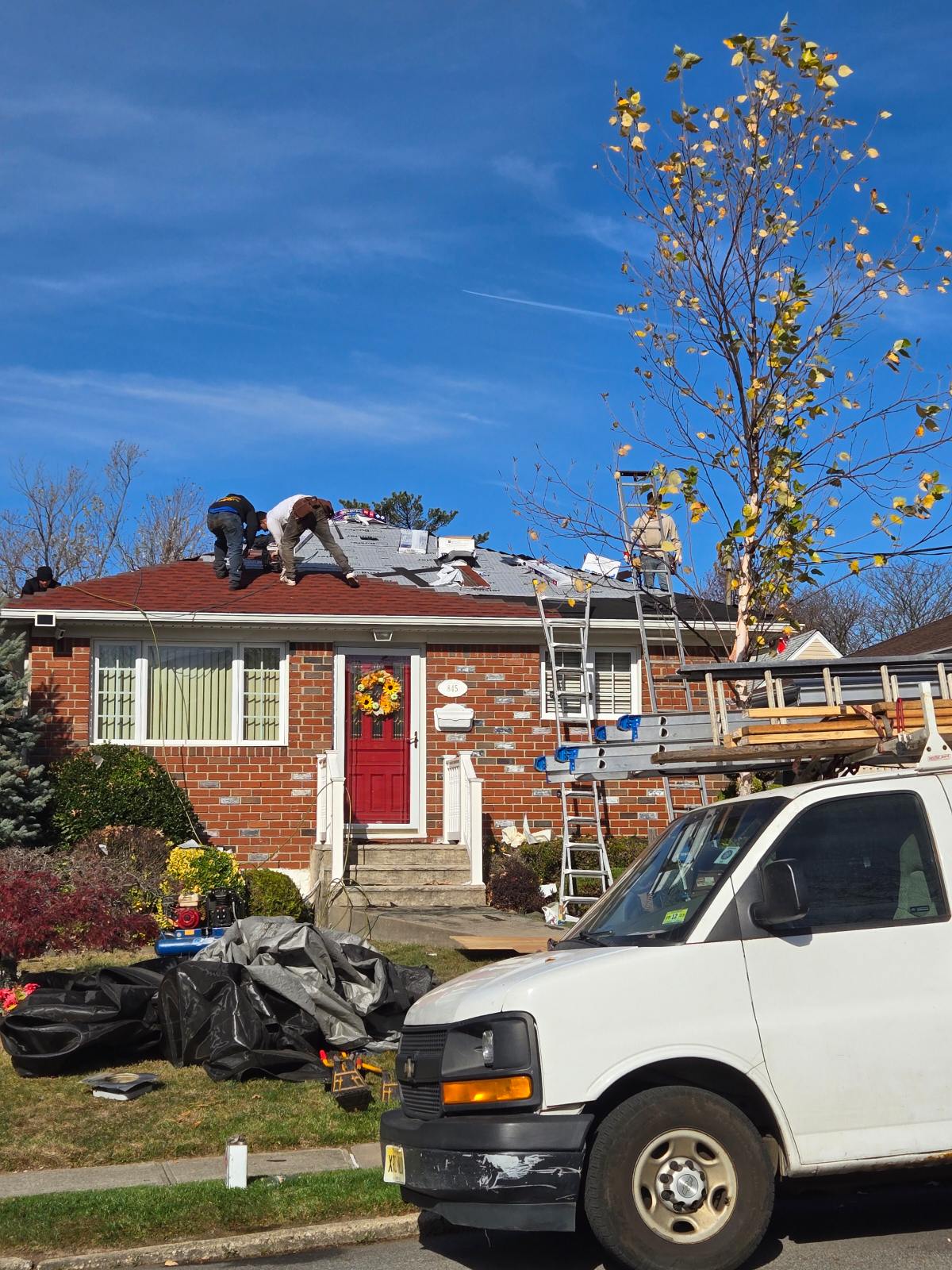

After a Storm, Distance Is Everything
The day after a bad blow, every roofer within fifty miles is booked and half the trucks in the neighborhood have out-of-state plates. Storm chasers show up fast, quote fast, and are gone before the first winter. We're based here, we've been here over twenty years, and the crew that answers your call is the crew that shows up — with the owner on site rather than a salesman. That's the whole reason we push people to book in August: the customers already on our list get looked after first.
If something has already happened and you're dealing with active water, don't wait for a callback loop — read our guide on emergency roof repairs after a storm, then reach out about roof repair in Staten Island so we can get a tarp on it and stop the damage spreading.
"We selected this company because they were honest and explained everything. They did an excellent job, worked quickly and cleaned up well."
See our profileA Six-Point Pre-Storm Check
None of these require you to get on the roof — and you shouldn't. Give yourself an hour on a dry afternoon and work through the list.
Walk the Perimeter
Stand back from each side of the house and look along the roof lines. Curled edges, dark patches, missing tabs, or a wavy ridge are all worth a call.
Check the Attic First
Bring a flashlight and look at the underside of the sheathing for dark staining, daylight at the eaves, or damp insulation. Leaks show up here long before the ceiling.
Clear the Gutters
Get the spring debris out and run a hose through. If water pools, overflows at the front lip, or the seams drip, the system needs attention before the next downpour.
Cut Back Overhanging Limbs
Anything touching or hanging over the roof should go. Branches abrade shingles in wind, and a limb over the house is the single most common storm puncture we repair.
Photograph Everything Now
Take dated photos of the roof, gutters, and siding while they're intact. Documented pre-storm condition makes any later claim far easier to substantiate.
Find Your Policy Details
Locate your homeowners policy and note your deductible and what it says about wind and water damage. You don't want to be looking for it by flashlight.
What Staten Island Homeowners Ask Us
The Atlantic season officially runs June 1 through November 30, but activity concentrates heavily from mid-August into October. For Staten Island, that's also when we get the biggest rainfall totals from tropical systems that pass offshore without ever making landfall here. If you're going to do one thing this year, do it in August.
Please don't. Asphalt shingles are slick with granule dust, ladders slip on wet grass, and more people are hurt inspecting their own roofs than by the storms they were worried about. Everything on our six-point list can be done from the ground or from inside the attic. Leave the rest to someone who's insured to be up there.
Maybe not — and if that's what we find, that's what we'll tell you. But a roof that doesn't leak in ordinary rain can still leak badly in wind-driven rain, because the water is being pushed sideways under shingles instead of running down over them. Not leaking today isn't the same as being storm-ready.
It depends entirely on how widespread the damage is. After a significant event we're triaging active leaks first, and we prioritize existing customers. That's the honest answer, and it's the reason we'd rather look at your roof in August than in the queue after a storm.
That's between you and your carrier, and policies vary a lot on wind, water, and how age and wear are treated. What we can tell you is that documentation helps: dated photos from before the event, photos immediately after, and a written contractor assessment. We'll provide our findings in writing — we just can't tell you what your policy will pay.
No — August and September are genuinely good months for it. Shingles need warmth to seal properly, and we still have plenty of it. A typical residential tear-off and replacement is a one- to two-day job for our crew. Wait until November and you're fighting cold decks and short daylight.
Chris started with a thorough, no-pressure inspection and provided a clear, detailed quote that broke down all costs, materials, and the timeline. He took the time to explain our options, helping us choose the perfect shingle for both durability and curb appeal. He was never pushy and answered every single one of our questions with incredible patience.
Where to Go Next
Roof Repair
Targeted fixes for lifted shingles, failed flashing, cracked pipe boots, and active leaks — before or after a storm.
Learn MoreGutter Repair
Resealing, re-pitching, refastening, and downspout work so heavy rain leaves the roof and lands where it should.
Learn MoreRoof Replacement
Full tear-off, new underlayment, and GAF shingles installed to spec when a roof is past the point of patching.
Learn MoreWhy Homeowners Call Us First
GAF Certified Plus Contractor
Factory-certified to install GAF systems, which means the wind ratings on the package actually apply to the roof we put on your house.
GAF Silver Pledge Warranty
Available on qualifying replacements — manufacturer-backed coverage on materials and workmanship, not just a handshake from the contractor.
Licensed & Insured
LIC #2103246. Ask any contractor knocking on your door after a storm for their license number before you sign anything.
Owner On Site, Every Job
Chris supervises the work himself. You're not handed off to a salesman and then to a subcontractor you've never met.
Two Decades on Staten Island
Over twenty years working these same neighborhoods, with a 4.9-star Google rating from the homeowners in them.
Meticulous Cleanup
Tarps down before we start, magnet sweep of the lawn and driveway when we finish. Nail-free grass is not an upgrade.
Storm Work Across Staten Island
Get Your Roof Checked This Month
It takes about an hour and costs nothing. You'll get a written assessment of what's holding up, what isn't, and what it would take to fix — with no obligation and no pressure. If your roof is fine, we'll tell you that and you can stop thinking about it.
Reach Out
Send us a few details about your home and what you've noticed. We'll get back to you to set a time.
Free Inspection
Chris walks the roof, checks the attic and gutters, and gives you a clear written estimate with photos.
Work Scheduled
If something needs doing, we book it while the weather is still on your side — and clean up when we're done.