
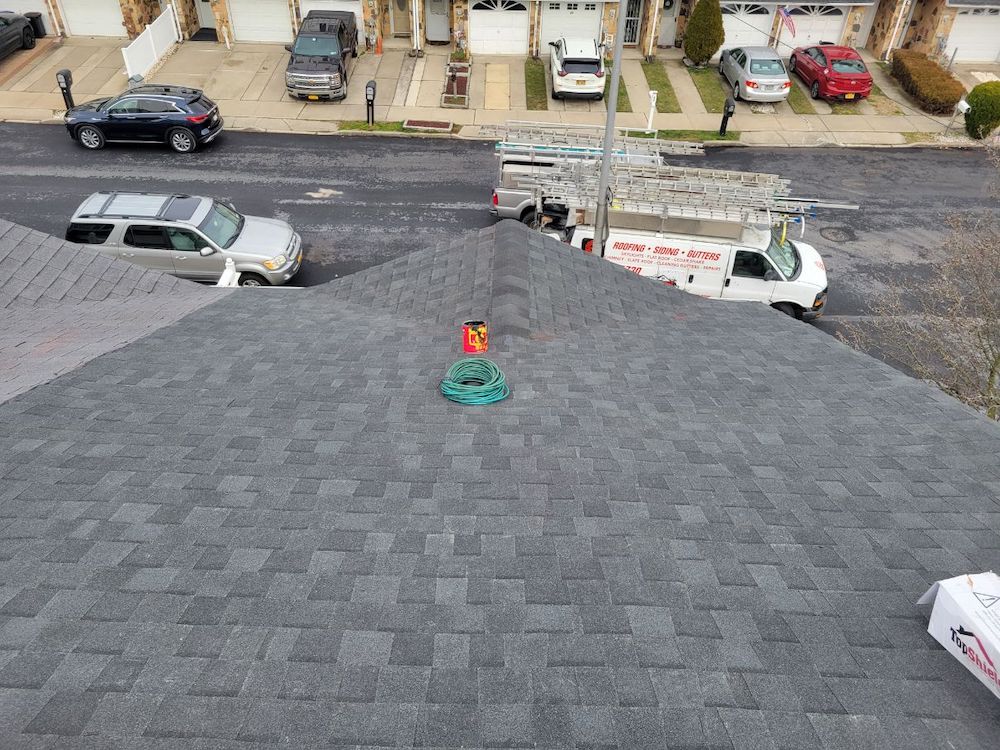
Attic Ventilation: The Hidden Reason Roofs Fail Early
Your Roof Is Only Half the System
Most homeowners think about a roof from the outside in — shingles, flashing, gutters. But a roof is a system, and half of that system lives underneath, in the attic. Air has to move through that space continuously: in at the eaves, out at the ridge. When it doesn't, the underside of the deck stays hot in July and damp in January, and the shingles above it age years faster than the warranty says they should.
We see it constantly on Staten Island. A roof that should have lasted 25 years starts curling at 12. Nail heads rust through from below. A homeowner blames the shingle brand when the real culprit was a blocked soffit and a ridge vent that was never cut open. This is one of the most common — and most preventable — reasons a roof needs replacing before its time.
Get a Free Estimate!
Five Things Every Homeowner Should Know About Airflow
Ventilation is invisible, which is exactly why it gets skipped. Here's how it works, what failure looks like, and what we check before quoting any roof on Staten Island.
How Attic Ventilation Actually Works
A vented attic works on a simple principle: cool air enters low, warm air escapes high. Intake happens at the soffits — the underside of your eave overhang. Exhaust happens at or near the peak, usually through a continuous ridge vent. Warm air rises, leaves through the ridge, and pulls fresh air in behind it. No fan, no power, no moving parts. It runs on physics as long as both ends stay open.
The balance matters more than the total. A roof with generous ridge venting and blocked soffits doesn't breathe — it just pulls conditioned air out of your living space through gaps in the ceiling, which raises your heating bill and drags moisture up into the attic with it. Roughly equal intake and exhaust is the target, and intake is the half that gets blocked most often: insulation shoved into the eaves, painted-over soffit panels, or vents that were never cut into the sheathing behind the vinyl in the first place.
In summer, a poorly vented attic on a sunny day can run 150°F or hotter. That heat bakes the asphalt shingles from underneath, driving out the oils that keep them flexible. In winter, warm indoor air that leaks into a cold attic condenses on the underside of the deck — you get frost, then drips, then mold and soft plywood. Same missing airflow, two very different kinds of damage.
"Chris was detailed, transparent, and took the time to explain the entire process, including what needed to be done and why. I never felt pressured, and his honesty gave me confidence that I was making the right decision."
See our profileWhat Proper Ventilation Looks Like Up Close
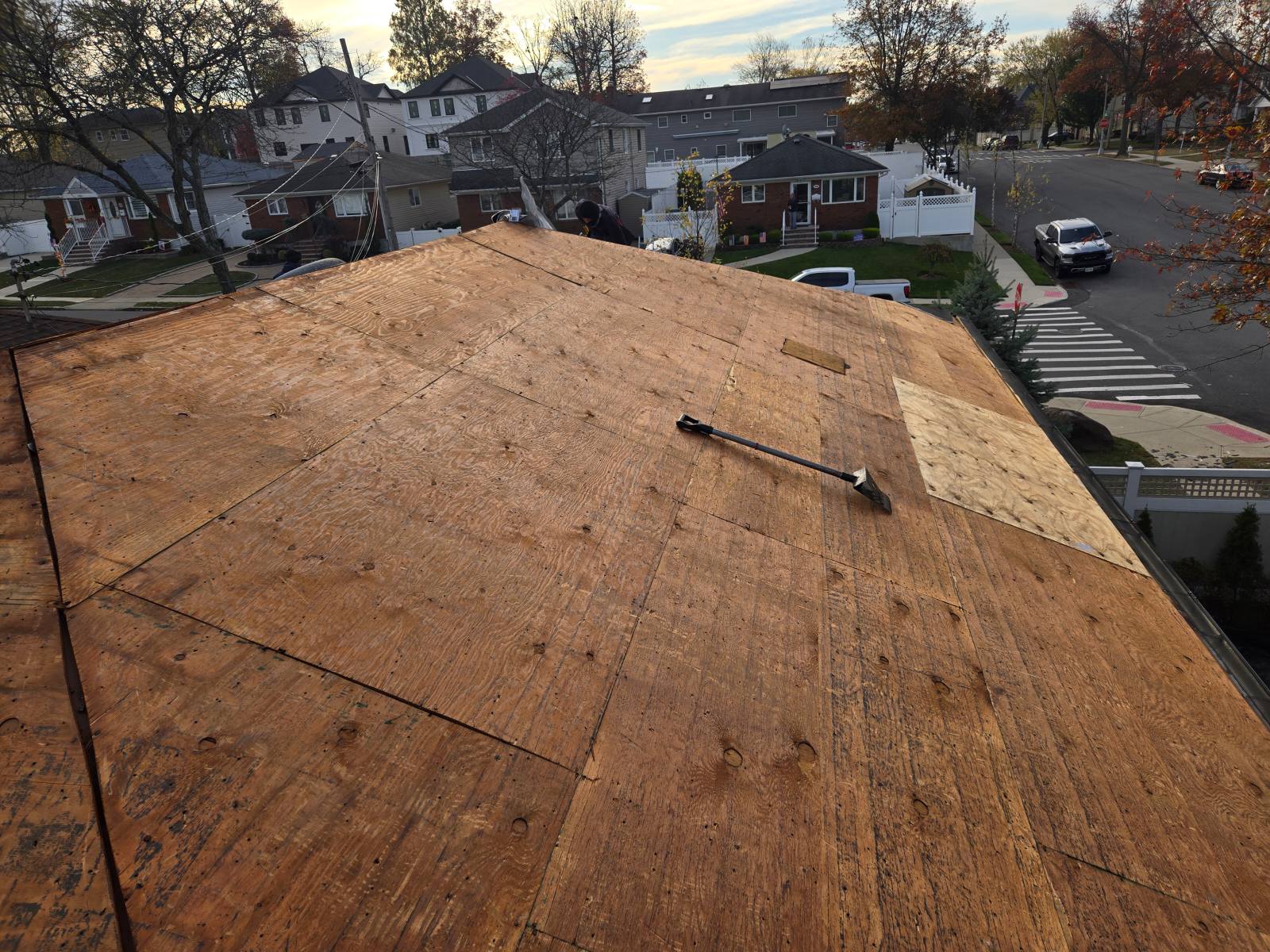
Ventilation isn't an add-on you bolt to a finished roof. It's decided during the tear-off, when the deck is bare and you can see what's actually there. That's the moment to check whether the sheathing was ever cut back at the ridge, whether the soffits have real openings behind the panels, and whether the old bathroom fan is dumping humid air into the attic instead of outside.
On a properly built roof, a slot gets cut along both sides of the ridge, the vent goes down over it, and cap shingles finish it so it disappears into the roofline. Baffles go in at the eaves so insulation can't slump forward and choke the intake. Then the underlayment, starter course, and field shingles go on over a deck that can finally dry out from both sides. You can't see any of it from the curb — which is precisely why it gets skipped by crews working to the lowest possible number.
If you're weighing a full tear-off against patching, ventilation is often the deciding factor. Our roof repair vs. replacement guide walks through where that line usually falls, and our roof replacement service in Staten Island page covers what a full rebuild includes.
"The crew was professional, friendly, neat, and clean; they finished the entire job in a day! Everyone was very knowledgeable about the project."
See our profile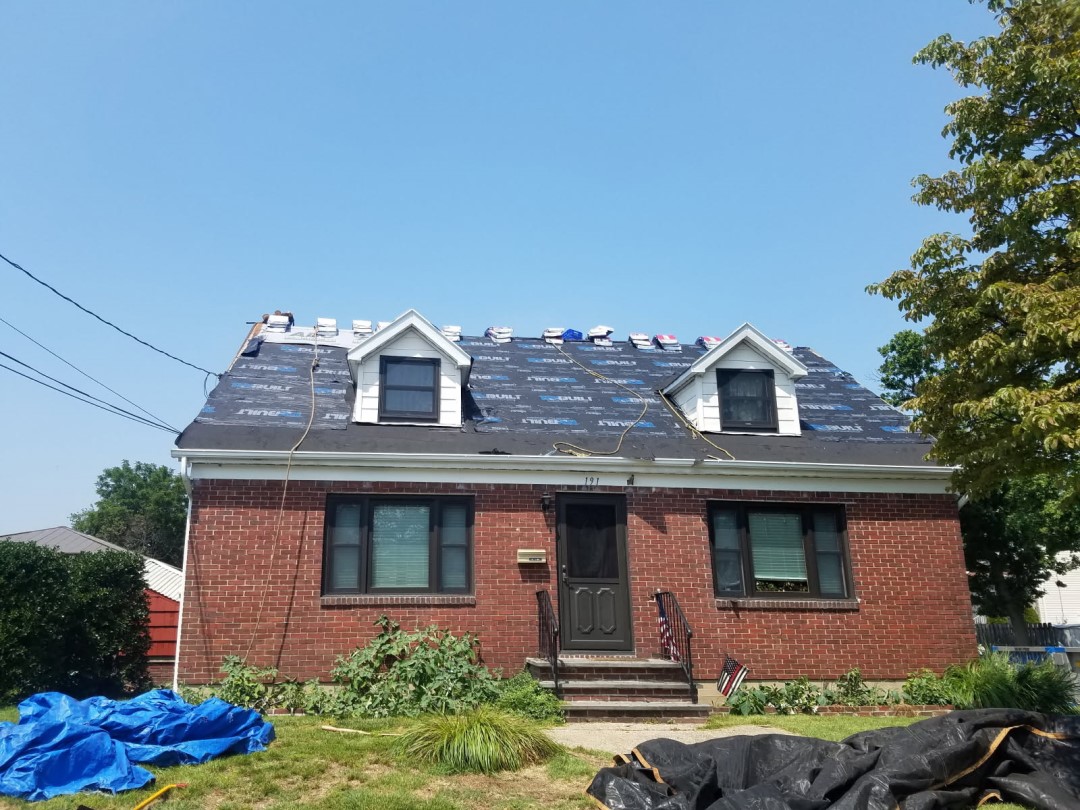
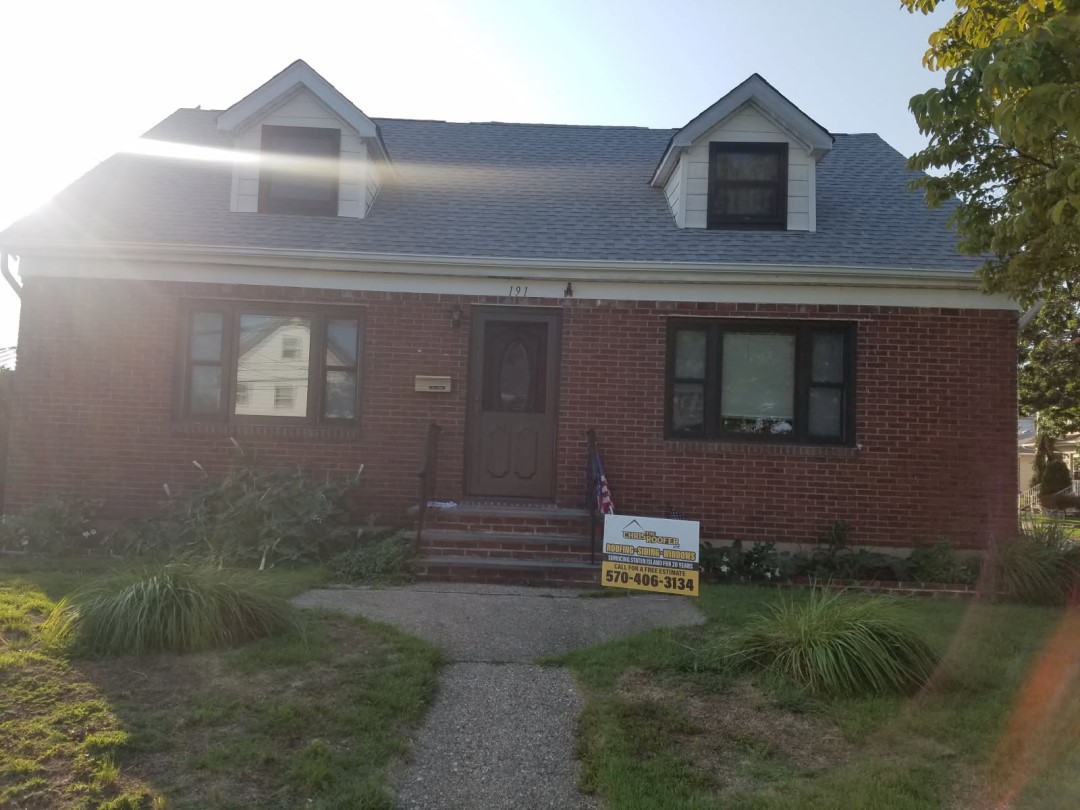
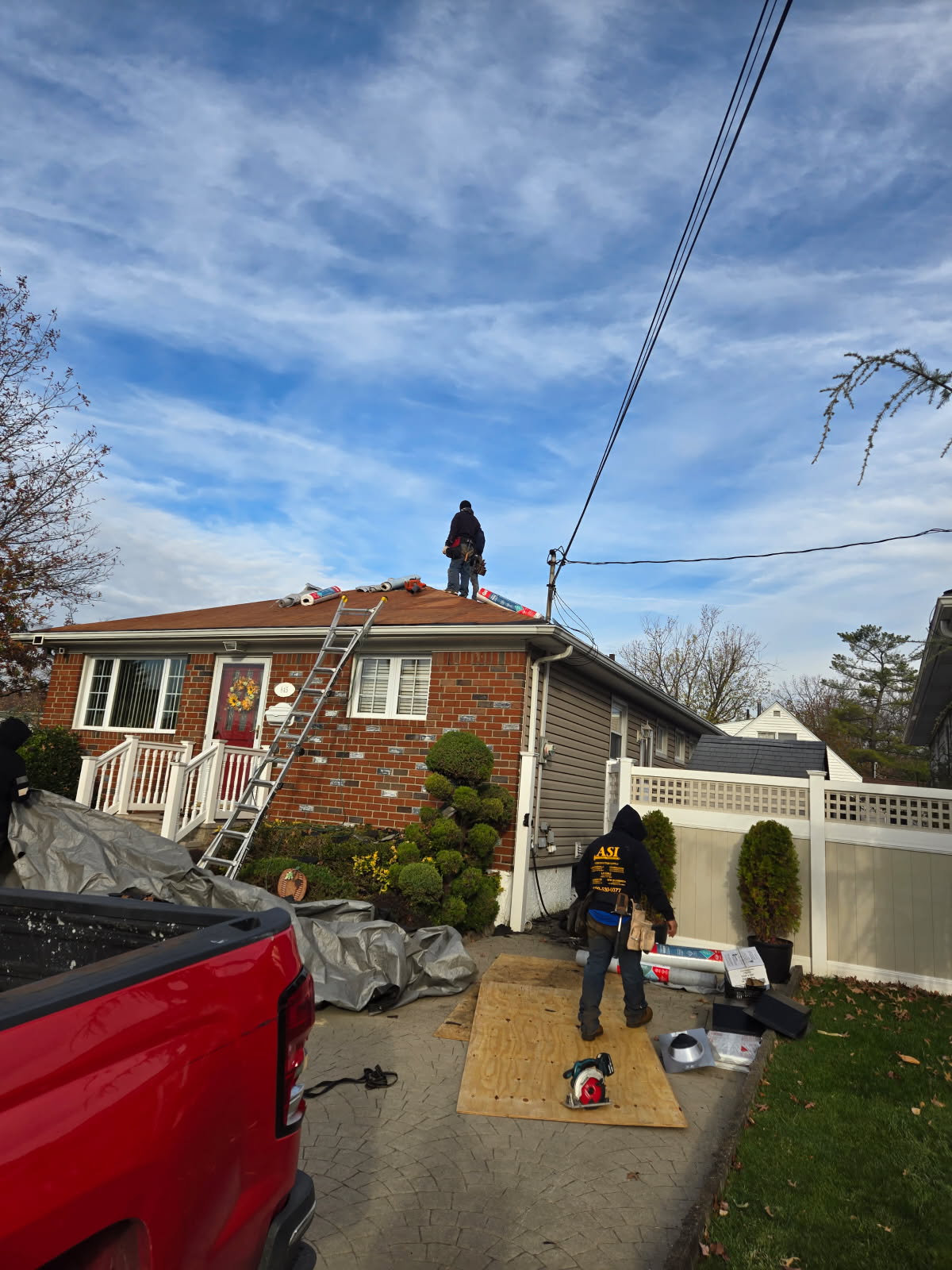
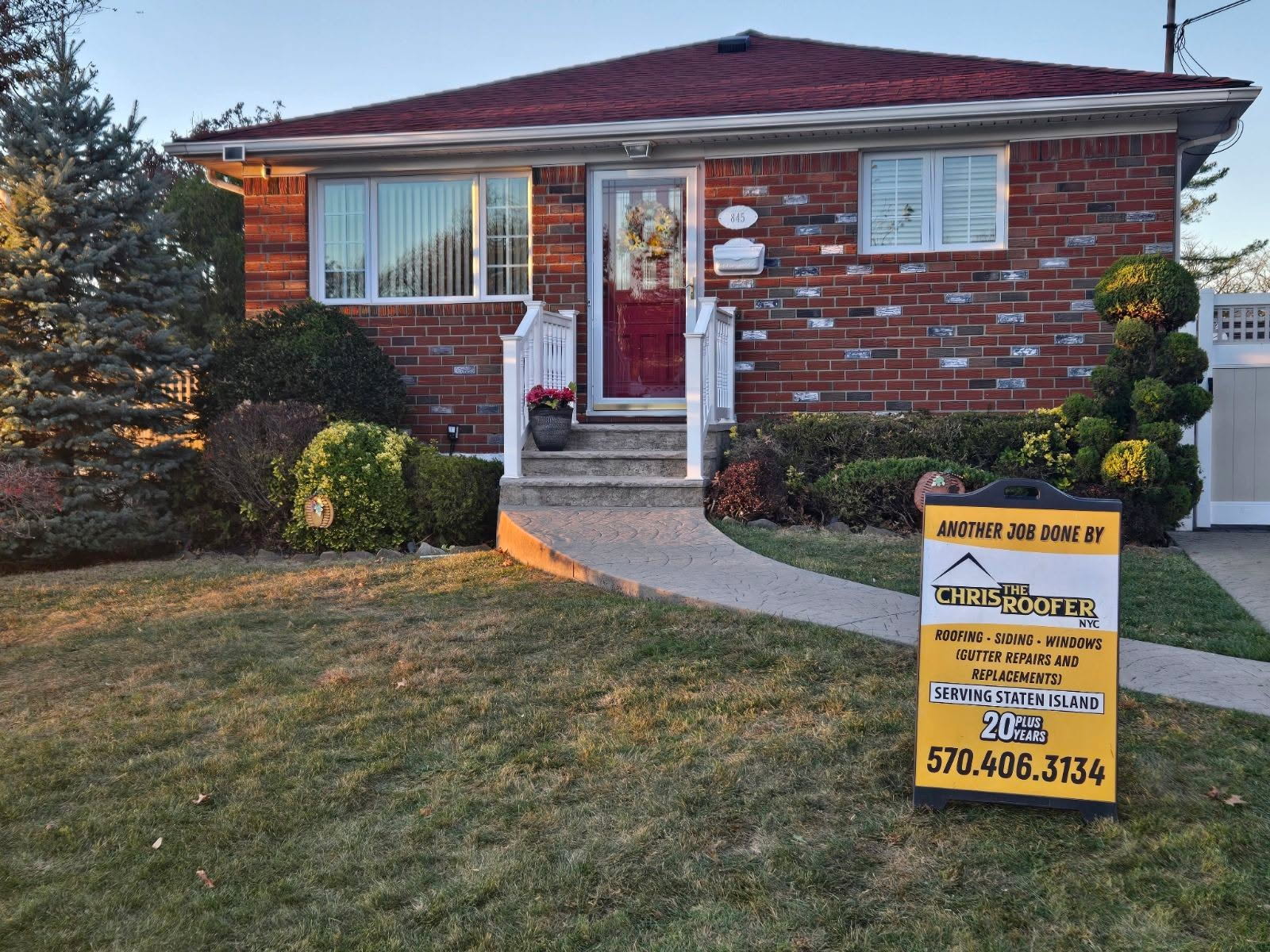
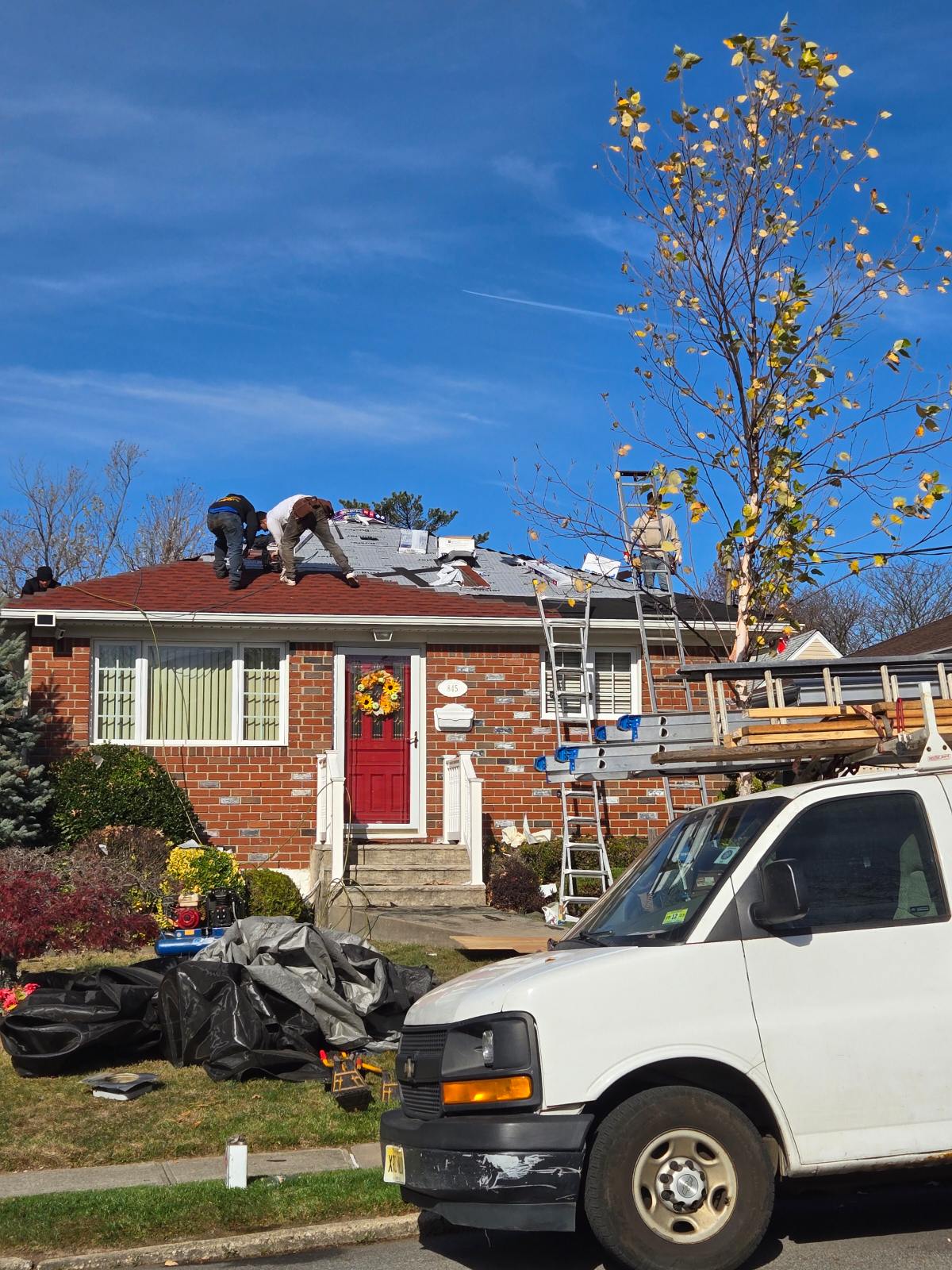
A brick Cape Cod with two front dormers, shown mid-installation and finished. Ridge venting and eave intake were addressed while the deck was still open — the only time you can do it properly.
Warning Signs You Can Spot Yourself
You don't need to get on the roof to catch a ventilation problem. Start in the attic on a cold morning: frost on the nail points or dark staining on the underside of the plywood means moist air is condensing up there. A musty smell, compressed insulation at the eaves, or a bathroom fan duct that ends in open attic space are all the same story. In summer, an attic that feels like an oven at 9am is telling you the heat has nowhere to go.
From the ground, look at the shingles on the sunniest slope. Curling edges, granule loss concentrated in one plane, or a wavy line running along the middle of the roof are signs the deck below has been cooking or moving. Rusted vent pipes and cracked flashing collars, like the ones in the photo here, often show up on the same roofs — heat and moisture age everything at once, not just the shingles.
Ice dams in winter are the loudest signal of all. They form when heat escaping into the attic melts snow at the top of the roof and it refreezes at the cold eave. That's a ventilation and insulation problem wearing a gutter costume — see our ice dam prevention and removal page for how we deal with it.
"Chris showed up immediately to do a small emergency repair job for me. Then he did a big repair job. Work was excellent and efficient. Good price!!"
See our profile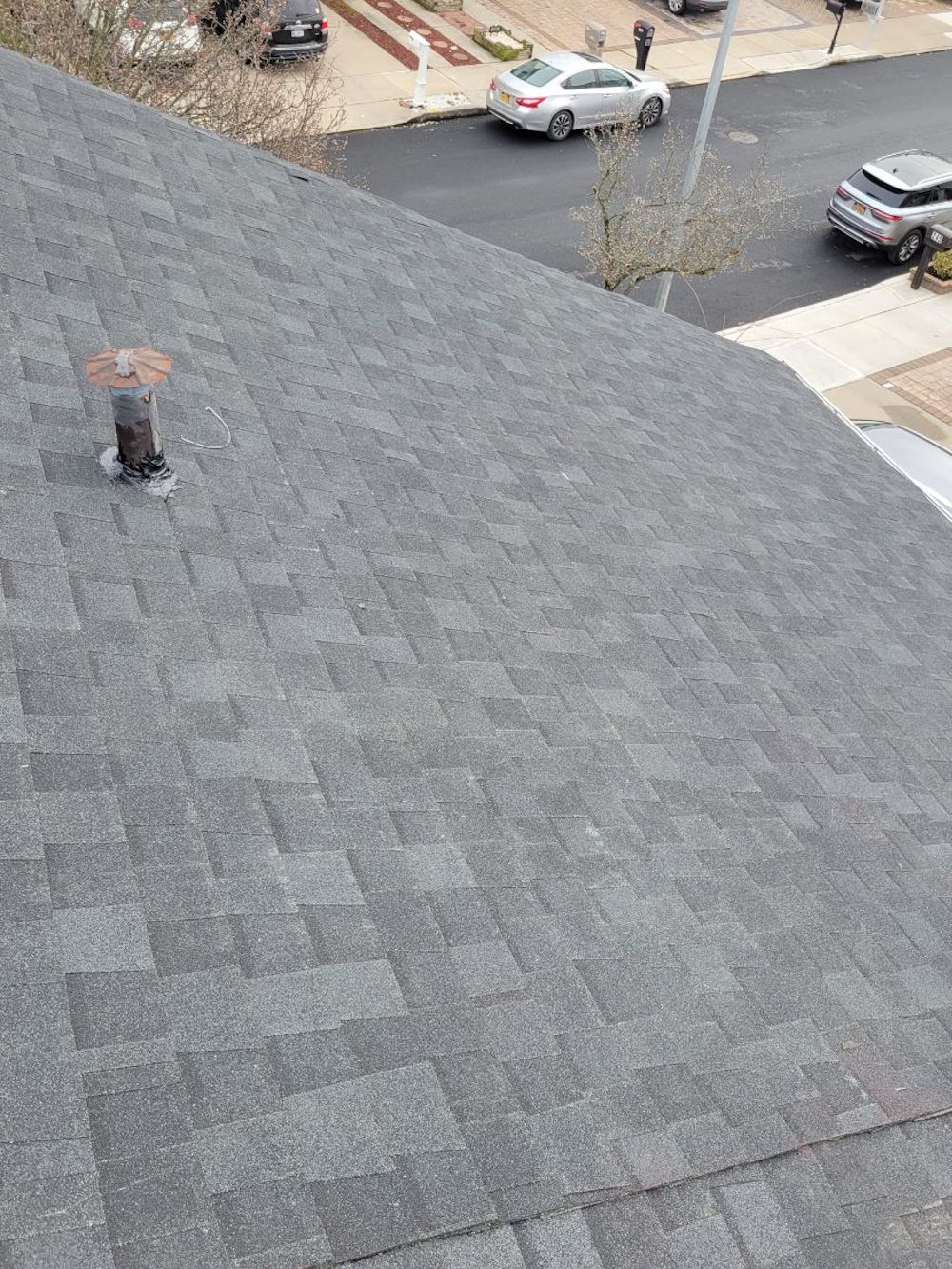
Staten Island Roofs We've Rebuilt
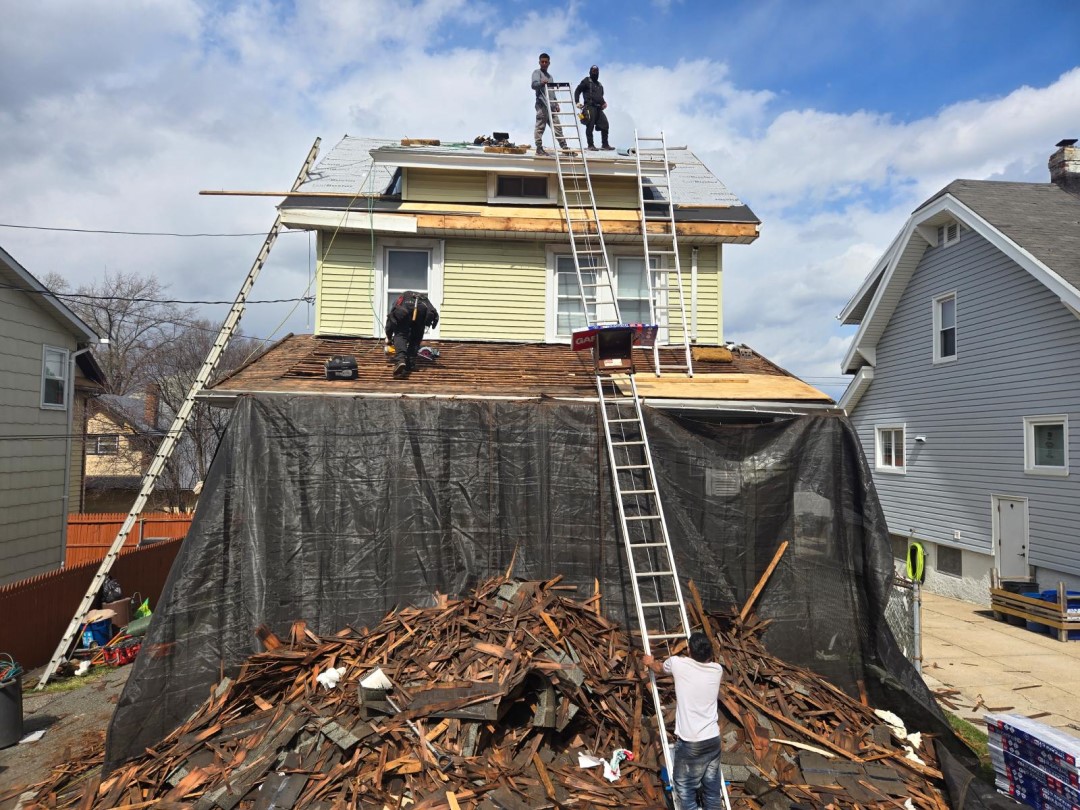
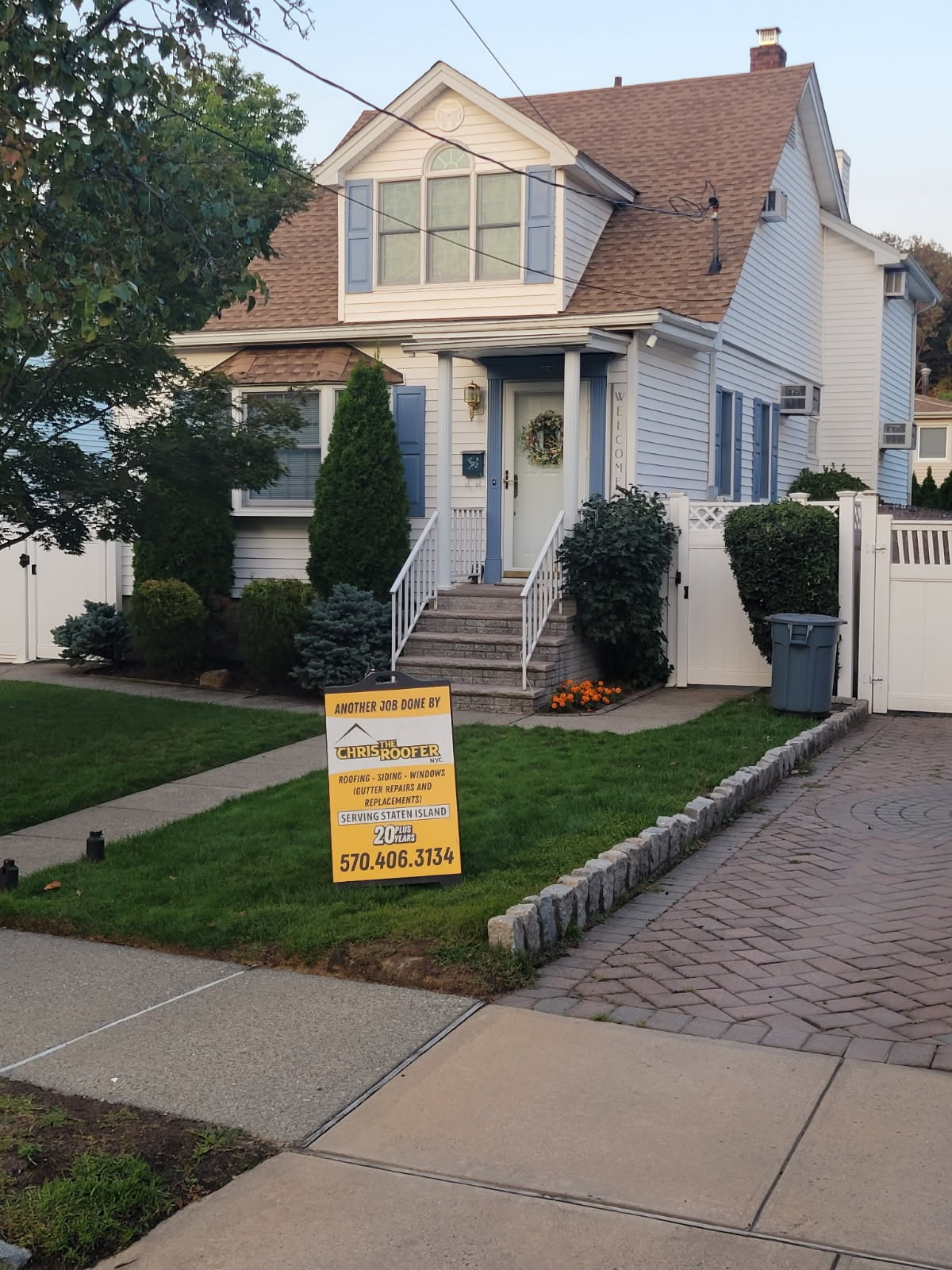
Every one of these jobs started the same way — stripped to bare plywood, deck inspected, ventilation corrected before a single shingle went down. You'll see decks opened up, underlayment going on, and finished roofs with the ridge line running clean from end to end. That ridge is where the exhaust lives, and on a job done right it looks like nothing at all.
Click any photo to view it full size. There's more in our project gallery, and if you want the step-by-step version, read what happens during a roof replacement.
"They were extremely meticulous and very neat. The quality of the work was excellent and after shopping around his price was the very reasonable."
See our profile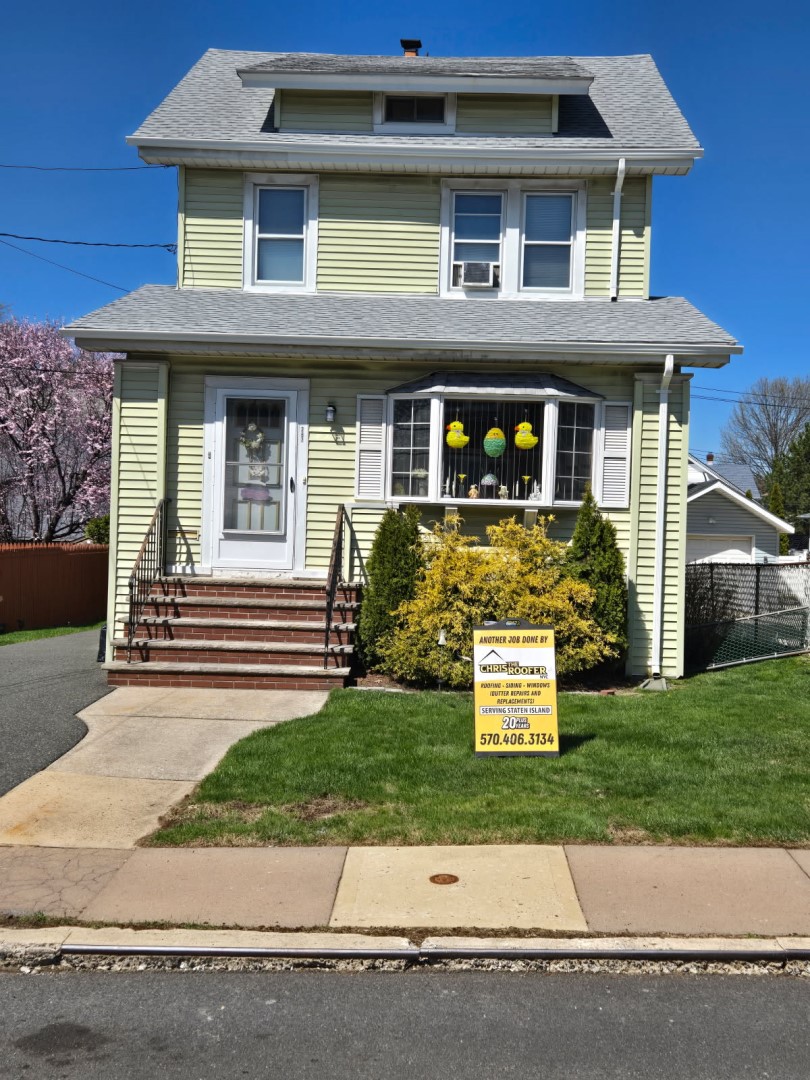
Why Staten Island Homes Run Hot and Damp
Staten Island's housing stock works against good airflow. A lot of the borough is postwar Capes, ranches and semi-attached homes with shallow eaves and tight overhangs — there's simply less room for soffit intake than on a house with deep eaves. Add decades of blown-in insulation pushed toward the edges during energy upgrades, and the intake side gets buried without anyone noticing.
Then there's the climate. We get humid coastal summers followed by freeze-thaw winters, sometimes in the same week. That swing is exactly what a sealed attic handles worst: moisture goes in during a warm spell and condenses when the temperature drops. Homes near the water in South Beach, Midland Beach and Tottenville see it worst, but we find it inland on Todt Hill and Grymes Hill too.
We've worked on this housing stock for over twenty years, and we know which eras of Staten Island construction hid the venting behind the siding. If something looks off during a roof repair visit, we'll say so.
"Chris and Anthony came recommended from my parents, who had their roof done by them as well. The process was straightforward and professional."
See our profileThe Parts That Make an Attic Breathe
Soffit Vents — The Intake Side
Soffit vents sit in the underside of the eave overhang and supply all the cool air the system draws in. They're either continuous perforated panels running the length of the eave or individual rectangular vents spaced along it. Because they're low, out of sight and easy to cover, they're the first thing to fail — usually not from damage but from insulation pressed against them or a siding job that laid solid panels over the openings.
If we can put a hand under the eave and feel no draft on a breezy day, intake is compromised. Fixing it is often the cheapest ventilation repair there is, and it makes every other vent on the roof work better.
Ridge Vents — The Exhaust Side
A ridge vent runs along the peak, covering a slot cut through the sheathing on both sides. Warm air collects at the highest point of the attic and leaves there, which makes the ridge the most efficient exhaust location on any pitched roof. Cap shingles go over the vent so the finished roof reads as one clean line.
The common failure is a ridge vent installed over sheathing that was never cut. It looks correct from the street and does absolutely nothing. We check for that on every tear-off, and it's a standard part of our roof replacement scope.
Gable Vents — Useful, With Caveats
Gable vents are the louvered openings you see high on the end walls of a house. On older homes they were often the only exhaust, and they still move air — but they pull it horizontally across the attic rather than up and out, which leaves dead zones near the ridge.
Mixing gable vents with a new ridge vent can short-circuit the airflow, letting the ridge draw from the gable instead of the soffits. Whether to keep them, block them, or leave them decorative depends on the attic. That's a judgment call we make on site, not a blanket rule.
Box and Turbine Vents
Box vents (the low square hoods near the ridge) and turbines (the spinning aluminum caps) are the older approach to exhaust. They work, but each one only serves the area immediately around it, so a roof needs several to match what one continuous ridge vent does.
They're still the right answer on complex roofs with short ridges, hips, or multiple planes where a continuous vent has nowhere to run. Turbines have moving parts and bearings that eventually seize, which is worth knowing before you choose them.
Powered Attic Fans — Use Carefully
A powered fan pulls air out of the attic mechanically. On a house with generous soffit intake, it can help during heat waves. On a house with blocked intake, it does something worse than nothing: with no easy source of outside air, it pulls conditioned air up through ceiling gaps and can even backdraft combustion appliances in the living space.
Our position is straightforward. Fix the passive system first. If intake and ridge exhaust are balanced and the attic still runs hot, then a fan is worth discussing — not before.
Baffles and Insulation Depth
Baffles are simple channels stapled between the rafters at the eave that hold a gap open between the insulation and the roof deck. Without them, insulation slumps forward over time and seals the intake shut. With them, air has a clear path from the soffit up to the ridge no matter how deep the insulation gets.
Ventilation and insulation have to be designed together. Sealing air leaks at the ceiling plane keeps warm, moist household air out of the attic in the first place, and that combination is what stops ice dams and the gutter damage that follows.
Our Attic Ventilation Assessment
Six steps, usually under an hour, and you get a straight answer either way.
1. You Call, We Schedule
Tell us what you're seeing — a hot upstairs, frost in the attic, ice at the eaves. We book a time that works around your day.
2. Attic Walkthrough
We go into the attic and look at the deck underside, the insulation line at the eaves, and where any exhaust ducts terminate.
3. Intake vs. Exhaust Math
We measure the actual open vent area against the attic footprint to see whether the two halves of the system are balanced.
4. Roof Surface Check
From above we look at ridge venting, flashing collars, pipe boots, and any shingle wear that points to heat from below.
5. Written Findings
You get photos and a plain-English summary of what we found, what's urgent, and what can wait a season or two.
6. The Fix, If Needed
Anything from opening soffits and adding baffles to correcting ventilation as part of a full tear-off. Chris is on site for the work.
Attic Ventilation, Answered
The common rule of thumb is one square foot of net free vent area for every 150 square feet of attic floor, split roughly evenly between intake and exhaust. That ratio can be relaxed to 1:300 when there's a proper vapor barrier and the intake and exhaust are well balanced. The number matters less than the balance — twice the exhaust with half the intake performs worse than a smaller, evenly matched system.
Often, yes. Opening blocked soffits, adding baffles, and rerouting a bathroom fan duct are all done from inside the attic or at the eave, with no work on the shingles at all. Adding or correcting ridge venting means cutting the roof at the peak, which is straightforward on a roof in decent shape but usually better folded into a replacement if the shingles are near the end of their life anyway.
It can. Most manufacturers, including GAF, require adequate ventilation as a condition of their material warranties, and a heat-related failure on an unvented attic is a common reason a claim gets denied. As a GAF Certified Plus contractor we install to spec so the coverage — including the Silver Pledge warranty — actually holds up if you ever need it.
No, if the ceiling plane is properly insulated and air-sealed. The attic is supposed to be roughly outdoor temperature; your insulation is what separates it from the heated part of the house. What raises heating bills is the opposite problem — warm air leaking up through gaps around light fixtures, hatches and ducts. Sealing those is what keeps the heat where you want it.
Premature curling, blistering and granule loss on a relatively new roof usually points to heat from underneath rather than a bad batch of shingles. Trapped attic heat drives the volatile oils out of asphalt shingles years ahead of schedule. Before replacing anything, it's worth confirming what's happening in the attic — otherwise the new roof ages the same way the old one did.
No. Inspections and estimates are free across Staten Island, and there's no obligation attached. If your ventilation is fine, we'll tell you and you've lost nothing but an hour. If it isn't, you'll have photos and a written summary you can use however you like.
Outstanding craftsmanship. Very professional service. I'd recommend him to anyone in need of a roof, gutters or anything roof related & at a very fair price. Chris is the only guy I know who can actually install a roof properly, as per manufactures specifications, and carries a manufactures warranty.
Related Services
Roof Replacement
Full tear-off, deck inspection, corrected ventilation and premium GAF shingles, with owner supervision start to finish.
Learn MoreIce Dam Prevention
Safe removal of existing ice dams plus the ventilation and insulation work that keeps them from coming back next winter.
Learn MoreGutter Repair
Resealing, refastening and realigning gutters so meltwater and heavy rain clear the roof edge instead of backing up under it.
Learn MoreTwo Decades on Staten Island Roofs
GAF Certified Plus
Factory-certified installation using premium GAF shingles, with the Silver Pledge warranty available on qualifying roofs.
Licensed & Insured
NYC Home Improvement License #2103246, fully insured, with documentation available before work begins.
Owner On Site
Chris supervises the work personally. You're not handed off to a crew leader you've never spoken to.
4.9 Stars on Google
Consistent five-star reviews from Staten Island homeowners across roofing, siding and gutter work.
Comprehensive Inspections
We look at the deck, the attic and the drainage — not just the shingles you can see from the driveway.
Meticulous Cleanup
Tarps down before the tear-off starts and magnet sweeps of the lawn and driveway before we leave.
Areas We Serve
Check the Attic Before the Cold Comes
The best time to fix ventilation is before winter, and the second best is during a roof replacement. Either way, it starts with someone actually looking. Free inspection, free estimate, no obligation anywhere on Staten Island.
Reach Out
Call or send the form with what you've noticed — hot rooms, frost, ice at the eaves, curling shingles.
We Take a Look
Attic and roof both get checked, with photos of anything that needs attention and a written summary.
You Decide
Clear pricing on whatever needs doing, and an honest answer if the right move is to wait.